Release time:2026-09-23 15:19:02 browse:
Selecting a proper paint roller is critical to achieve smooth coating finishes, boost construction efficiency and reduce paint waste. Roller fabric, size and pile height determine its compatibility with different paints, substrates and working conditions. This article analyzes six models of JDR series rollers, covering microfiber, polyester and nylon fabrics in 4-inch and 9-inch sizes, to support contractors, decorators and overseas buyers in product selection.
What you are painting | Recommended fabric | Why |
Interior emulsion / latex topcoat, smooth walls | Microfiber (M) | Lowest lint, finest film, fewest stipples |
General wall painting, price-sensitive project | Polyester (P) | Cheap, tough, high paint loading |
Solvent-based paint, primer, rough / cement surface | Nylon (N) | Solvent-resistant, springy pile, wear-proof |
Corners, trims, switch plates, touch-ups | 4" mini roller | Reaches tight spots a 9" sleeve cannot |
Whole rooms, ceilings, large façades | 9" standard roller | Maximum coverage per dip, faster |
All six rollers share one design rule — the same 12 mm medium pile — and differ only in fabric and format. That is exactly what makes the comparison fair: every variable except the nap material is held constant.
Item No. | Size | Color | Material | Pile |
JDR-M-4" | 4" × 15 mm core | Orange + White | MICROFIBER | 12 mm |
JDR-P-4" | 4" × 15 mm core | Yellow | POLYESTER | 12 mm |
JDR-N-4" | 4" × 15 mm core | Grey + White | NYLON | 12 mm |
JDR-M-9" | 9" × 44 mm core | Orange + White | MICROFIBER | 12 mm |
JDR-P-9" | 9" × 44 mm core | Yellow | POLYESTER | 12 mm |
JDR-N-9" | 9" × 44 mm core | Grey + White | NYLON | 12 mm |
JDR-M-4" · Microfiber mini rollerJDR-M-9" · Microfiber standard sleeve
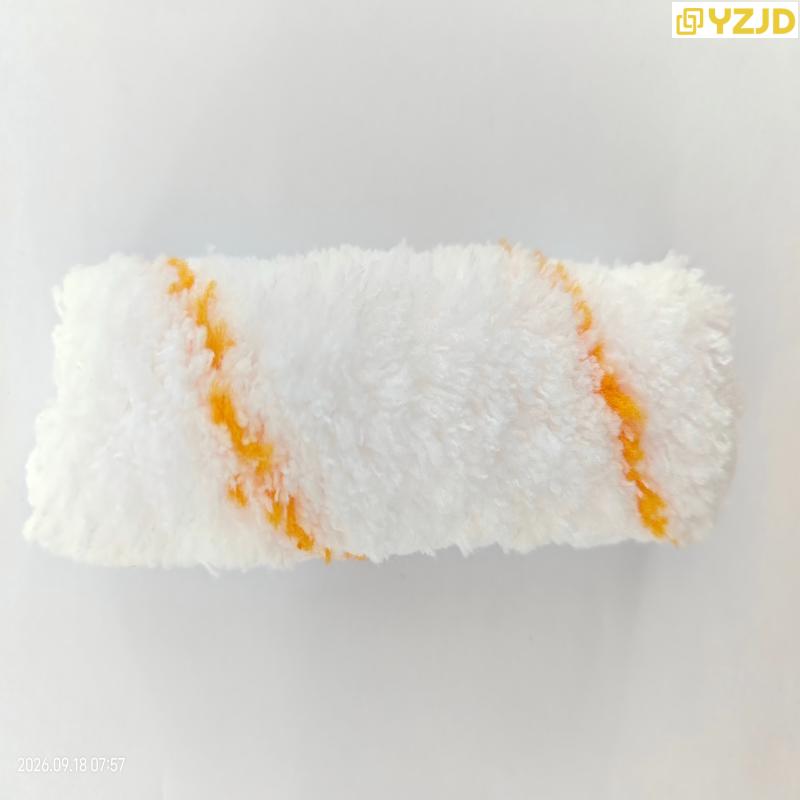
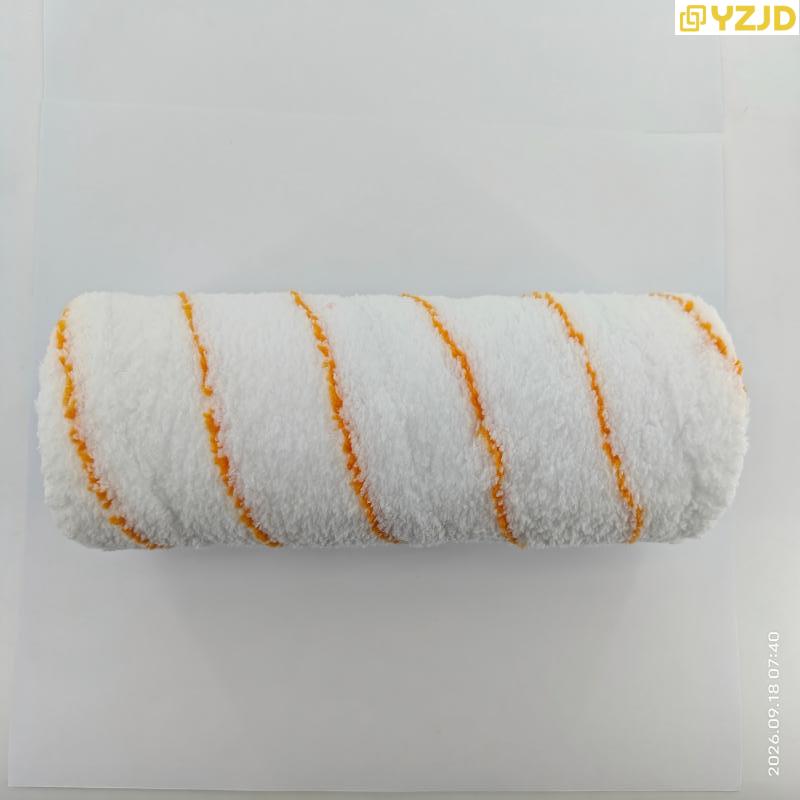
Microfiber is the quiet hero of premium interior finishing. Its fibres are spun far finer than standard textile yarn, which changes the physics of the roller in two ways. First, a single sleeve holds dramatically more surface area, so paint is released in a thin, even film rather than blobs. Second, the fine structure sheds far fewer loose fibres — the #1 complaint homeowners have with cheap rollers.
Finish: smoothest film, least stipple, best for matte / silk latex topcoats.
Lint: lowest of the three; rinses clean and reuses well.
Weak spot: softer nap does not bite hard into rough cement; best on prepared, smooth substrates.
Recommended for: Decorators and painters who sell a premium interior finish, apartment touch-ups, showroom walls. Pair the 9" sleeve for the main wall and the 4" mini for corners and window returns.
JDR-P-4" · Polyester mini rollerJDR-P-9" · Polyester standard sleeve
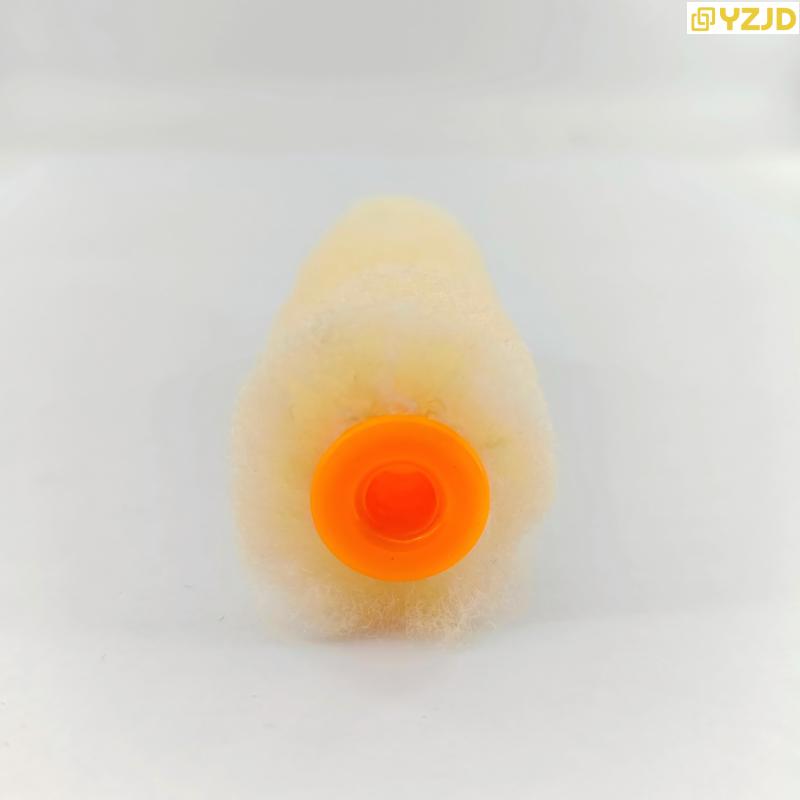
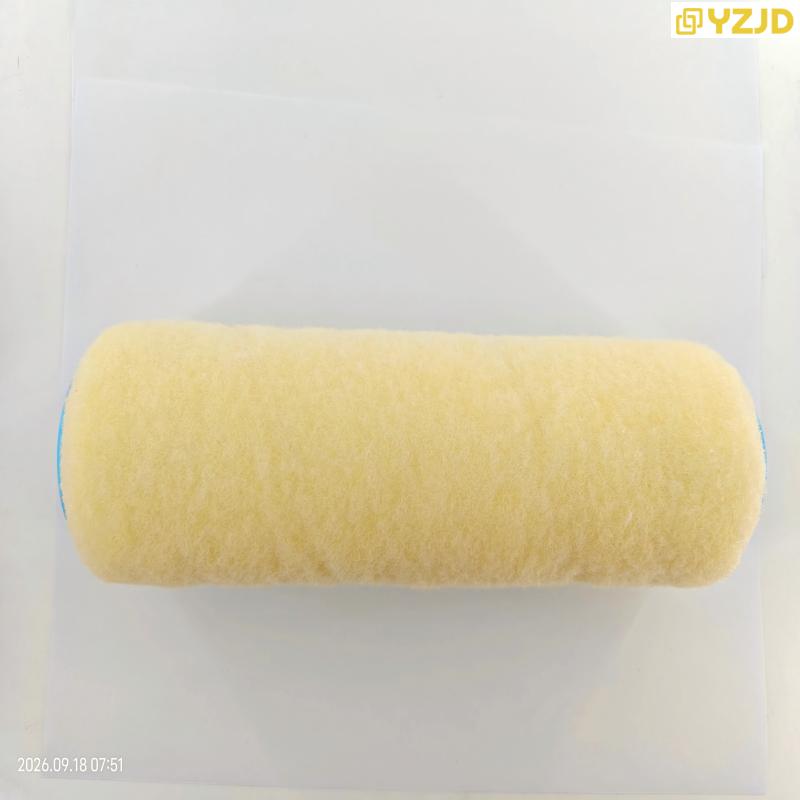
Polyester is the workhorse of the roller world. Thermally bonded, water-resistant, and kind on the factory budget, it is the default choice for large-volume, cost-sensitive contracts. It loads a generous amount of paint and keeps going on bumpy plaster where a softer nap would crush.
Finish: solid and practical, but you may see a faint stipple and the very occasional loose fibre — visible on high-gloss, invisible on matte.
Durability: tough against rough surfaces; the most economical per square metre covered.
Weak spot: not the choice when the customer judges the wall under raking light.
Recommended for: Bulk interior decoration, rental refurbishment, emulsion on dry putty, and any project where price-per-sleeve matters more than a museum-grade finish.
JDR-N-4" · Nylon mini rollerJDR-N-9" · Nylon standard sleeve
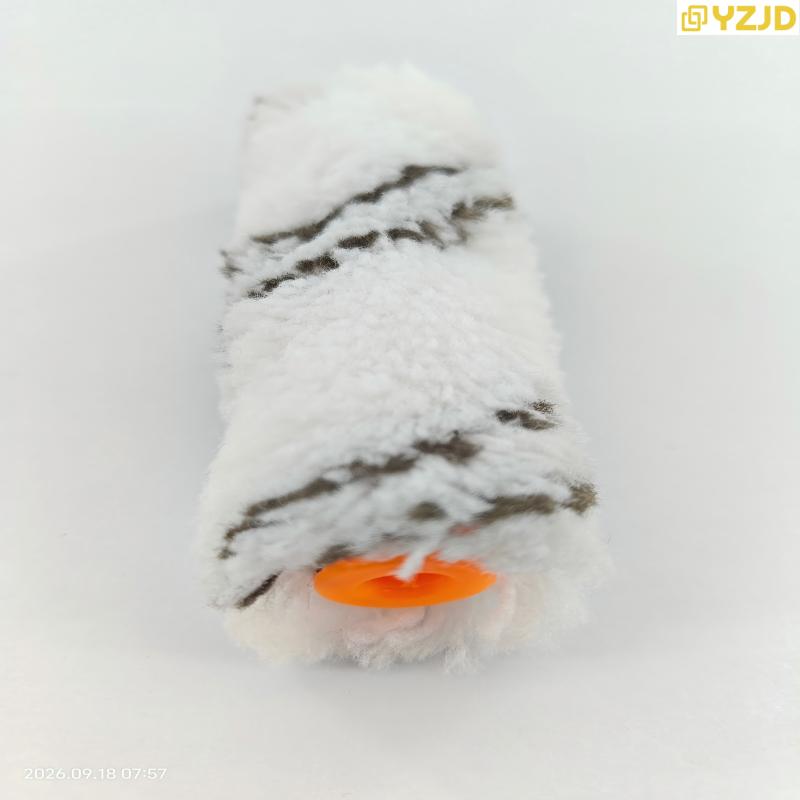
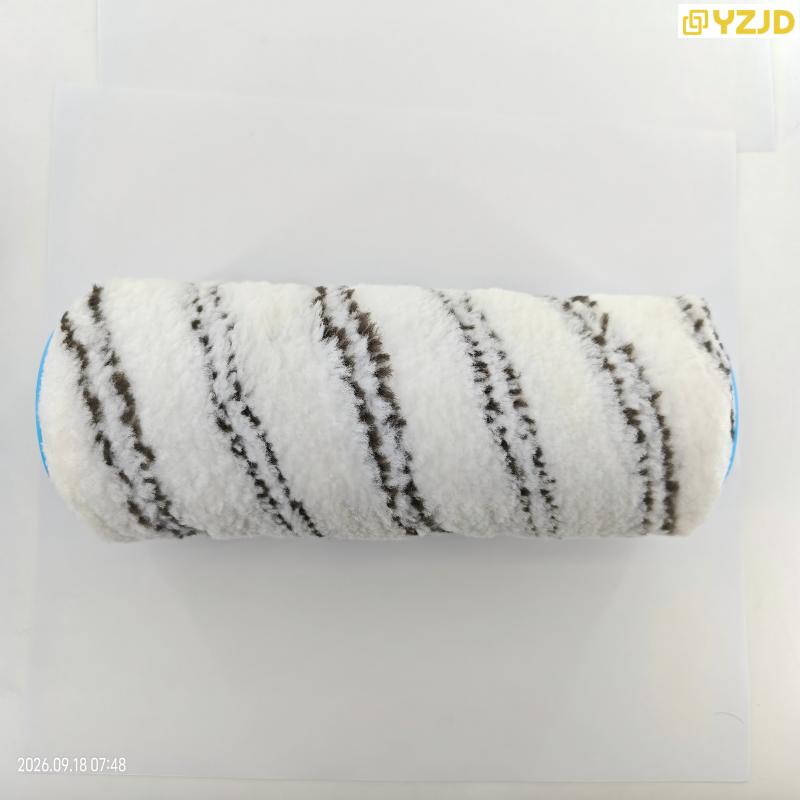
Nylon is the specialist. Its springy, solvent-resistant fibre shrugs off alkyd primers, epoxy coatings and anti-corrosion paints that would quickly mangle a polyester sleeve, and it keeps its shape on abrasive cement or rendered façades. The grey-and-white heathered look also reads as a heavier, more industrial fabric on the shelf.
Finish: slightly firmer than microfiber on pure water-based latex — not the softest wall feel, but very even.
Durability: best wear resistance and chemical tolerance in the trio.
Weak spot: overkill for a cheap interior emulsion job; pay for performance you will not use.
Recommended for: Primers and base coats, solvent-based or epoxy paints, exterior and rough-surface work, floor and metal coating where abrasion is real.
Pile height is the dial that matches a roller to a surface — and 12 mm sits in the sweet spot.
Pile | Surface it fits | Trade-off |
Short (3–6 mm) | Glass-smooth walls, high-gloss finish | Zero stipple, but very little paint loading |
Medium (10–13 mm) — this series | Most interior walls, putty, light texture | Enough paint loading, controlled film thickness, minimal orange-peel |
Long (≥16 mm) | Heavily textured / rendered façades | Massive paint loading, higher risk of runs and uneven film |
Keeping 12 mm identical across all six units is a deliberate design choice: a painter can switch between the 9" body roller and the 4" corner roller and still lay down the same film thickness, so the finish does not patch up where the mini roller took over.
9" × 44 mm (standard) is the engine. It covers roughly 0.5–0.8 m² per load, drops the number of trips to the tray, and is the default for any wall larger than a door.
4" × 15 mm (mini) is the surgeon. It fits into internal corners, along window frames, around switch plates and behind radiators. Using a mini roller instead of a brush for these edges means the same nap texture continues into the corner — no brush-mark patch.
Pro painters almost always buy them as a matched pair: the 9" for 90 % of the wall, the 4" for the other 10 % nobody else can reach.
Your priority | Pick |
Show-home / hotel-grade latex finish, lowest lint | JDR-M series (Microfiber) — 9" for walls, 4" for edges |
Tightest cost per square metre, general emulsion | JDR-P series (Polyester) — the volume buyer's default |
Solvent / epoxy / primer or rough exterior surface | JDR-N series (Nylon) — built to survive |
Not every roller needs to be the most expensive on the shelf — it needs to match the paint, the wall and the job. The JDR line is built around that idea: one pile height, three proven fabrics, two sensible sizes. Ask us for a sample box and run your own finish test on the wall you actually paint.


 English
 Spanish