Release time:2026-09-11 08:16:01 browse:
Ever used a brush that looked fine but left worse finishes over time? The problem is simple: you can't tell when a
solid-color brush is truly worn out. Color-gradient bristles solve this.
The Blind Spot of Solid Bristles
With one-color bristles, tip wear is invisible until it's severe. By the time you notice, the brush has already been
underperforming — streaking, shedding, cutting poorly.
Gradient Bristles as a Wear Indicator
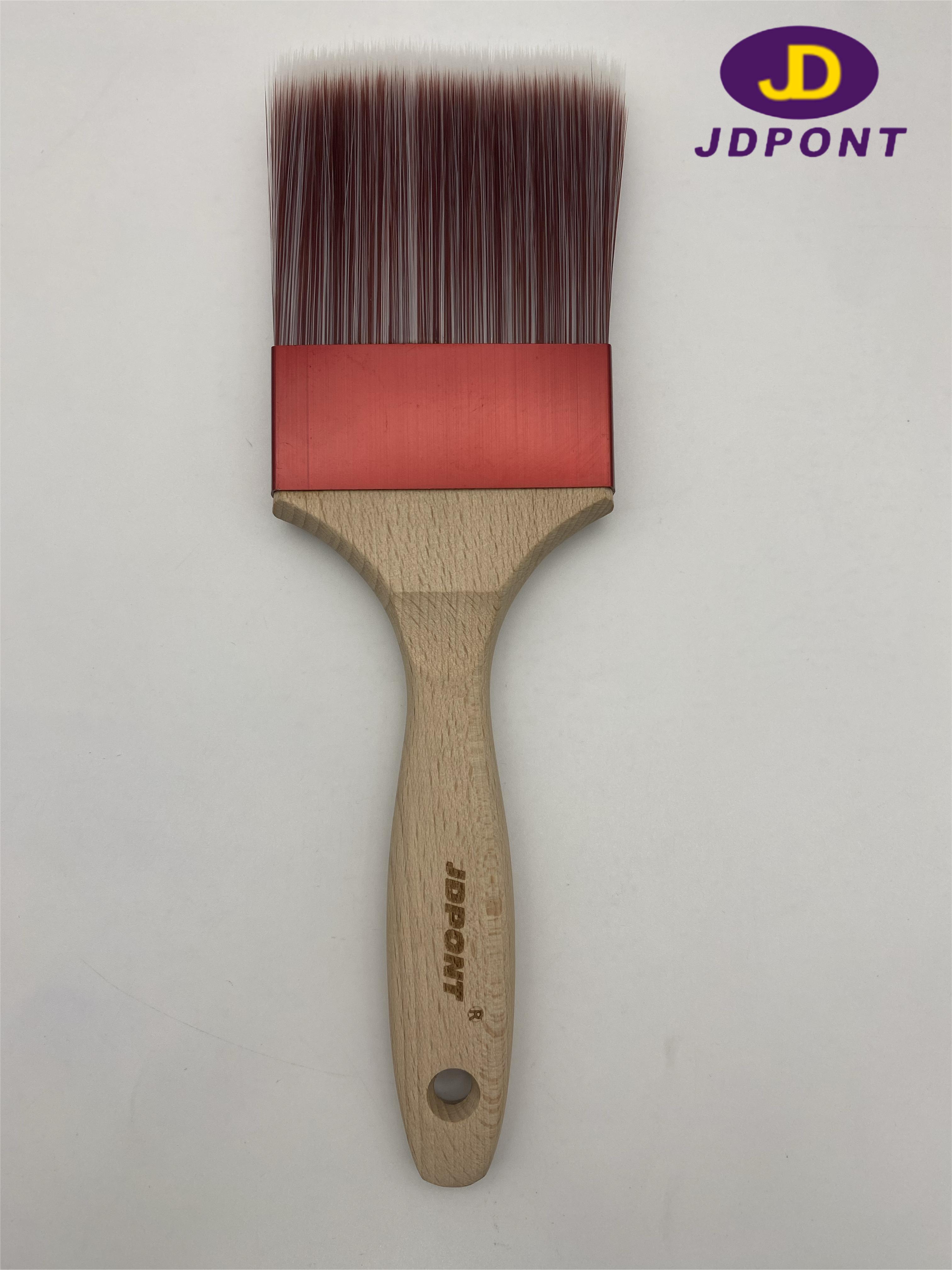
Wine-red roots fading to white tips create a clear transition line. When new, the white section is your baseline.

White tips wear first — they contact the surface and take the most friction, like a pencil point.
Just check how much white remains:
White Tip Remaining | Wear Level |
Same as new | 0% |
Worn 1/3 | Light |
Worn 1/2 | Moderate |
Worn 2/3 | Heavy — replace soon |
Almost gone | Extreme — replace now |
One glance tells you everything.
True vs. False Wear
Shorter tips may just be clumped paint or bent filaments. Wash, shake dry, and smooth with fingers — if
length returns, it's false wear.
Gradient bristles turn "when should I replace this?" into a color signal you read instantly. Note the white-tip
length on a new brush, then check after every use.
Good tools tell you when they're still good — in their own way.


 English
 Spanish